
What Ignoring a Sluggish Door Costs You
A garage door that hesitates, groans, or needs a shove to get moving rarely stays a minor issue. Left alone through one more cool, damp season, the extra strain works its way into the opener's gears, the cables, and eventually the springs. What starts as a five-minute lubrication job in November can turn into a snapped cable or a seized opener motor by the time storm season rolls back around — right when you need the door sealing tight and moving fast the most. The repair bill for a sluggish door caught early is almost always smaller than the bill for the part that failed because nobody looked at it.
The Symptoms Worth Paying Attention To
- The door hesitates or jerks partway through its travel instead of moving in one smooth motion.
- It feels stuck at the bottom, like it's gripping the garage floor or threshold before it releases.
- The opener strains audibly — a higher-pitched motor whine or a grinding sound on startup.
- The remote or wall button works, but nothing happens right away, with a delayed response before the door finally moves.
- Rollers squeak or skip inside the track instead of rolling smoothly.
- The door reverses or stops without an obvious obstruction in the way.
Any one of these on its own might be nothing. Two or more together, especially after a stretch of heavy afternoon downpours or a cooler, damp morning, points to something worth checking.
Where a Technician Starts Looking
1. The Weatherstripping and Threshold Seal
This is the first and easiest thing to rule out. Vinyl and rubber seals absorb moisture during Southwest Florida's wet stretches and can swell enough to grip the concrete or the door panel itself, especially after a hard rain followed by a cool night. The fix is straightforward: trim or replace the swollen seal and check that the threshold hasn't warped. If the door was dragging only at the very bottom of its travel, this is often the whole problem.
2. The Tracks and Rollers
Next, a technician runs a hand along the tracks checking for rust pitting, bent rails, or debris that's worked its way in. Salt air corrodes galvanized track rails faster than it would further inland, and small rust blisters create enough friction to make rollers catch instead of glide. The fix ranges from cleaning and realigning the track to replacing rollers that have gone from steel to nylon-with-bearings, which resist moisture-driven wear far better over time.
3. Old or Thickened Lubricant
Grease and oil-based lubricants can thicken in cooler mornings and gum up with humidity, salt residue, and dust in equal measure. If the rollers, hinges, and springs haven't been lubricated with a proper garage door lubricant in the last six to twelve months, this is almost always part of the problem. The fix is a full clean-and-relube of every moving point — not just a quick spray on the tracks, which is a common half-measure that misses the hinges and spring coils where friction actually builds.
4. The Springs
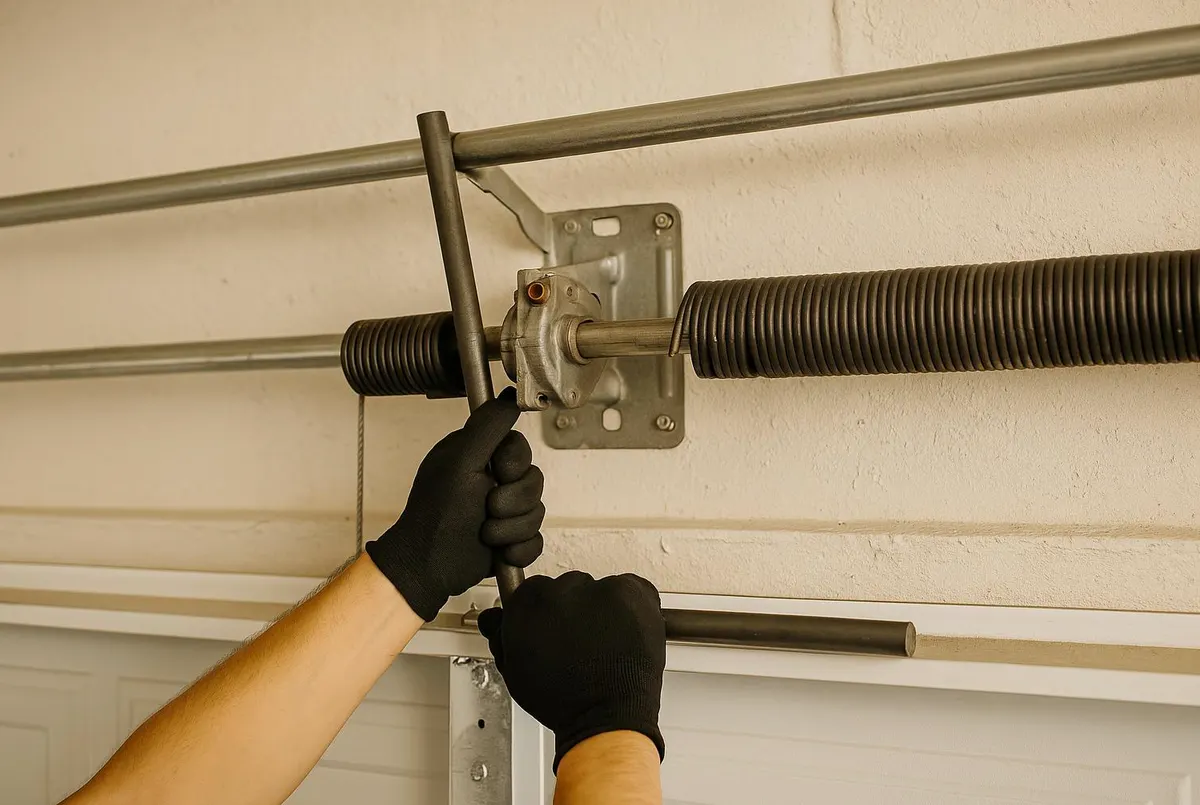
If the door is still sluggish after the easy fixes, springs come next. Salt-laden air accelerates surface rust on torsion and extension springs, and rust between the coils reduces how freely they flex. A door with weakened or corroded springs makes the opener do more of the lifting than it's built for, which is exactly the strain that leads to a snapped spring down the road — often at the least convenient moment. This is not a DIY repair: springs are under heavy tension and need to be assessed and replaced with the correct wind-rated hardware for the door's weight and size.
5. Opener Settings and Sensors
If the mechanical side checks out, the opener itself gets tested. Humidity and condensation can fog or mist the photo-eye safety sensors near the floor, causing the door to hesitate or reverse as if it's detecting an obstruction. Limit and force settings can also drift over time, especially on openers that are a few years old, making the motor work harder than it should to open or close fully. The fix is usually cleaning and realigning the sensors and recalibrating the force settings — quick work for a technician, frustrating guesswork for anyone without the right gauge.
6. Cables
Last on the list, because it's the least common cause of simple sluggishness but the most serious if present: frayed or rusted cables. A cable that's lost strands won't always announce itself with a snap — sometimes it just makes the door uneven or slow on one side first. Any visible fraying or rust bloom on the cable means replacement, not patching.
When to Call Marco Island Garage Door Pro
If your door is sticking at the bottom, straining the opener, or moving unevenly, it's worth having it looked at before the next heavy rain or the start of next storm season makes the problem worse. We handle Garage Door Spring Repair and Garage Door Cable Repair as same-day service across Marco Island and the surrounding Southwest Florida communities, and we'll walk the full diagnostic order above — seals, tracks, lubrication, springs, opener, cables — so you know exactly what's wearing and why.
Don't wait for a sluggish door to become a stuck one. Call Marco Island Garage Door Pro today for fast, honest service anywhere in the 34145 area and beyond.