
The short answer
In almost every rental situation, the landlord is responsible for garage door repairs caused by normal wear, age, or mechanical failure — broken springs, a dying opener, worn cables. The tenant is responsible for damage they cause: backing a car into the door, letting kids slam it off track, or ignoring an obvious problem until it gets worse. That's the rule of thumb almost every lease follows, even when the lease itself doesn't spell it out line by line. If you two are arguing about who pays for the squeal coming from the garage every morning, start there.
Why this split makes sense
A garage door is a mechanical system with a lifespan, like a water heater or an AC unit. Springs wear out from cycle count, not misuse. Openers fail from age and electrical wear. Panels swell or rust from humidity and salt air, especially this close to the coast, and that's a maintenance issue, not something a tenant did wrong. Landlords own the equipment, so they own the failures that come from it simply getting old or living in a tough climate. Tenants own the consequences of how they use it day to day.
What typically falls on the landlord
- Broken or weakening garage door springs
- Garage door opener that won't respond, grinds, or dies mid-cycle
- Cables fraying or snapping from age
- Panels warping, rusting, or delaminating from moisture exposure
- A door that won't seal properly against wind-driven rain
What typically falls on the tenant
- A dented or cracked panel from a car, bike, or moving mishap
- A door knocked off track because something was forced through it while partially closed
- Remote controls or keypads lost or broken by misuse
- Damage from leaving the door open during a storm when it should have been closed
- Failure to report an obvious problem that then causes more damage
Gray areas exist. If a tenant reports a grinding noise and the landlord sits on it for months until the opener burns out, that's on the landlord. If a tenant never mentions a sagging door and it eventually jumps the track, that shifts some responsibility back.
The move-in inspection that prevents the argument later
Most of these disputes happen because nobody checked the door's condition on day one. A ten-minute walkthrough at move-in settles it before it becomes a fight.
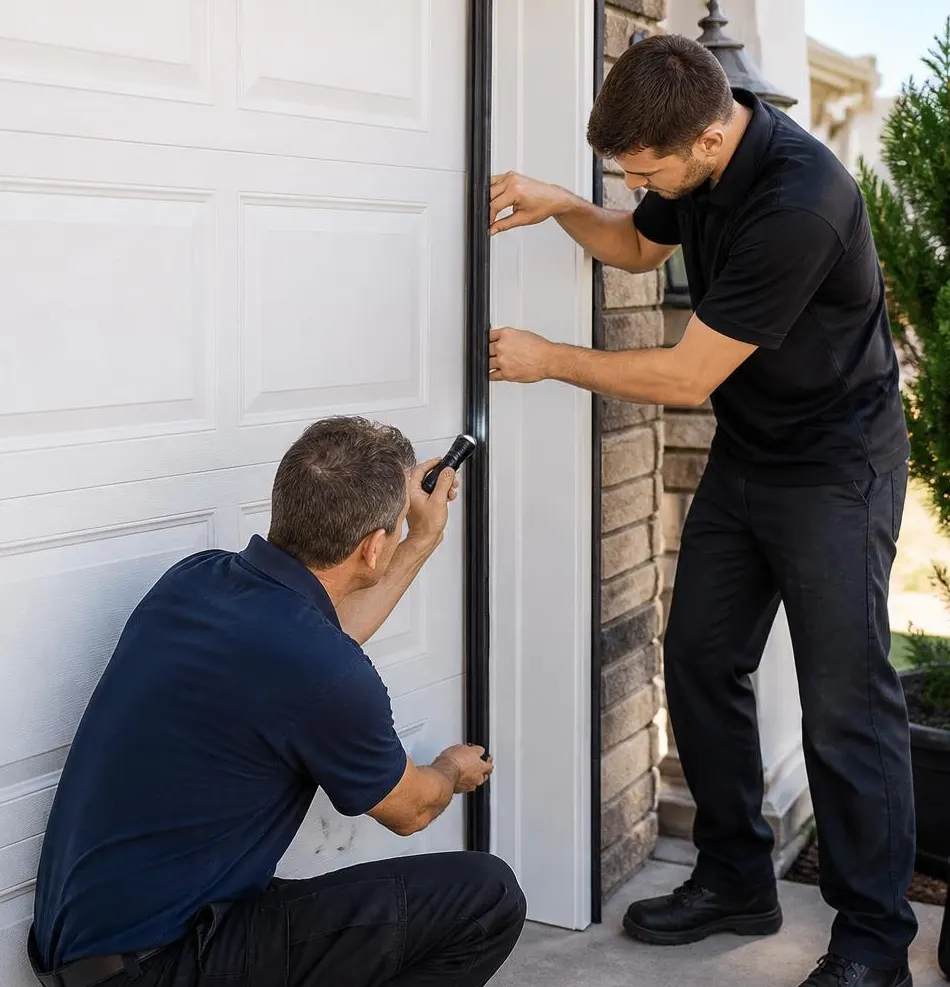
- Open and close the door manually (disconnect the opener first) and feel for resistance, grinding, or uneven movement — signs of spring or track trouble that predate the tenant.
- Check the tracks for rust, bends, or gaps where the rollers sit loose. Coastal humidity speeds up track corrosion, so this matters more here than in drier climates.
- Inspect panels for dents, cracks, or soft spots from water intrusion. Photograph anything existing so it's documented before move-in, not disputed after move-out.
- Test the opener through a full cycle, including the auto-reverse safety feature (it should stop and reverse if it hits something on the way down).
- Check the weatherstripping along the bottom and sides. Cracked or missing seals let in wind-driven rain during afternoon downpours and should be noted as pre-existing.
- Confirm cable condition — frayed strands near the bottom bracket are a safety issue and should be flagged immediately, not left for whoever's using the garage that week.
Take photos or a short video, timestamp them, and send a copy to the landlord in writing. That single step resolves most future disagreements without anyone needing to raise their voice.
When to call Marco Island Garage Door Pro
If you're the landlord and a tenant reports a spring that's lost tension, a cable that's fraying, or a door that's drifted off track, we handle garage door spring repair and off track door repair as same-day jobs in most cases, so the unit isn't sitting unusable. If you're the tenant and you're not sure whether what you're looking at is wear-and-tear or something you're on the hook for, we can inspect it, tell you honestly which category it falls into, and give the landlord a clear, written assessment to work from — no guessing, no finger-pointing.
Whether you're moving in, moving out, or just trying to settle who pays for what, call Marco Island Garage Door Pro for a straight answer and fast service anywhere in Marco Island, FL.