
The Sound That Stops You Mid-Driveway
You pull in after work, hit the clicker, and instead of the familiar quiet roll-up you get something that makes you wince. Maybe it's a metal-on-metal grind as the door climbs the track. Maybe it's a squeal sharp enough that your neighbor looks over. Maybe it's one loud pop followed by the door sagging slightly to one side, or a rattle that shakes the whole frame on the way down. Each of these noises points to a different part of the system, and a technician checks them in a specific order—visible and easy first, internal and dangerous last.
Grinding: Something Is Fighting the Track
Grinding usually means metal parts are rubbing where they shouldn't, and it tends to get worse the longer you ignore it.
- Rollers and track alignment — the first thing checked, because it's visible without tools. Steel rollers that have flattened, rusted, or come loose will grind as they ride the track, especially after months of coastal humidity working on the metal. Fix: clean the track, re-align it, and replace worn rollers (often with nylon rollers, which run quieter and resist corrosion better).
- Debris or bent track sections — sand, salt residue, or a track knocked slightly out of true from a storm can cause grinding even with good rollers. Fix: clear the track, re-seat or replace the bent section.
- Opener drive gear — if the noise comes from the motor unit itself, the internal gear (often nylon) may be stripped. This requires opening the opener housing to inspect. Fix: gear-and-sprocket kit replacement, or opener replacement if the unit is older.
Squealing: Something Needs Lubrication or Is Worn Out
Squealing is friction's way of announcing itself, and it's almost always about moving metal parts that have dried out or worn down.
- Dry hinges and rollers — checked first since it's a two-minute fix. Months of humidity followed by dry stretches can strip lubricant fast. Fix: a silicone-based garage door lubricant on hinges, rollers, and the track (not WD-40, which attracts grit).
- Worn roller bearings — if lubrication doesn't quiet it down, the bearings inside the rollers themselves may be shot. Fix: roller replacement.
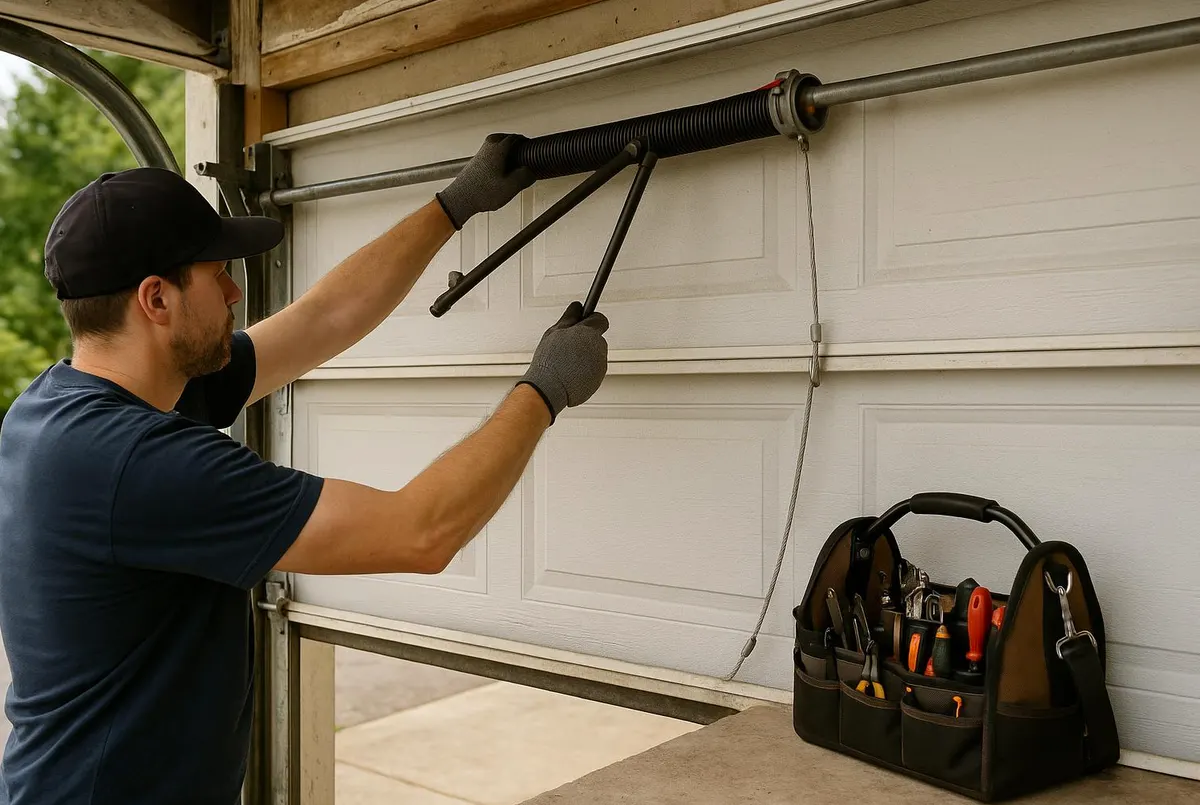
- Torsion spring bearing plates — a persistent squeal near the header above the door often comes from the bearings the torsion spring rotates on. Fix: bearing plate lubrication or replacement, done alongside a spring inspection since both wear together.
Popping: Usually Tension, Sometimes Structure
Popping is the noise that tends to worry people most, and for good reason—it's often related to stored tension.
- Torsion spring stress — checked first and treated carefully, since springs under tension can cause injury. A loud pop followed by the door feeling heavier or hanging crooked often means a spring has shifted or is close to failing. This is not a DIY fix.
- Loose hinges or brackets — hardware that has backed out slightly will pop as sections flex. Fix: re-torque bolts to spec, replace stripped holes with longer fasteners.
- Panel flex from humidity swelling — wood or composite panels that have absorbed moisture can pop at the seams as they expand and contract through the day's heat swings. Fix: resealing panel edges, or panel replacement if swelling has caused warping.
Rattling: Nearly Always Loose Hardware
Rattling is the most common complaint and usually the cheapest to resolve.
- Loose bolts and brackets — checked first with a simple walk-around and a socket wrench. Vibration from storms, daily use, and salt-air corrosion on fasteners all loosen hardware over time. Fix: tighten everything, replace any corroded bolts.
- Loose chain or belt drive — a slack chain on a chain-drive opener will slap against the rail. Fix: tension adjustment per the opener's manual.
- Worn rollers rattling in the track — if tightening hardware doesn't stop it, rollers with play in the track are the next suspect. Fix: roller replacement.
When to Call Marco Island Garage Door Pro
If the noise is a grind that's getting louder, a pop you heard once and then the door won't move smoothly, or a squeal that lubrication didn't fix, it's time to get a second set of eyes on it—especially anything involving the torsion spring, which should never be adjusted or replaced without the right tools. We handle Garage Door Spring Repair and Garage Door Cable Repair as same-day calls across Marco Island, Naples, and the surrounding Collier County area, and we'll also check rollers, hinges, and track alignment while we're there so a small noise doesn't turn into a stuck door during storm season.
If your garage door is making a noise that doesn't sit right with you, call Marco Island Garage Door Pro for fast, honest service in Marco Island, FL.